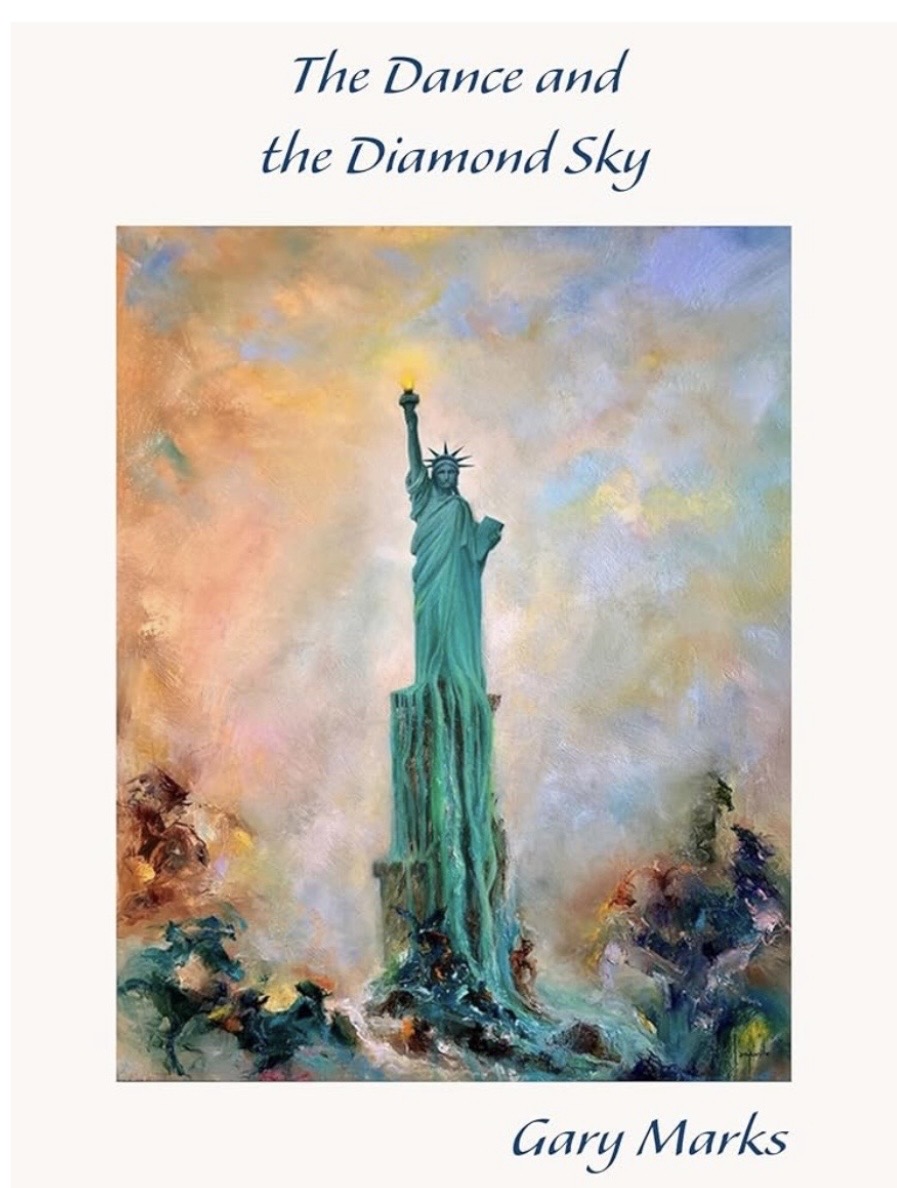
There are moments in history that refuse to fade — and according to author and musician Gary Marks, the late 1960s is one of them. In this exclusive interview, Marks discusses his novel, The Dance and the Diamond Sky, and why the emotional and political climate of that era feels strikingly similar to America in 2026.
Interviewer: I believe this is one of the world’s last chances to hear the real story about the Sixties Generation — and how it relates to 2026 America — by someone who actually lived it. We have with us today the author of an amazing book about a time long past that, in so many ways, mirrors the times we live in. Gary Marks, tell us about The Dance and the Diamond Sky.
Gary Marks: Well, first of all, it may not be the last chance to hear the real story. But it is a story that has often been told by people who weren’t actually there, or who flatten it into caricature. School history books will never want students to know what really happened. American history books written for educational institutions funded by the government are not going to pull back the curtain on corrupt presidents like Richard Nixon, or the cultural revolution that took place in the ’60s by hippies, grandmas, Senator Eugene McCarthy, Martin Luther King Jr., and Robert F. Kennedy.
The Dance and the Diamond Sky is a novel about a group of college friends in the late ’60s who are trying to figure out who they are in a country that suddenly feels unstable and morally compromised. The government isn’t abstract to them — it’s drafting them and their friends. It’s sending people to die. It’s asking them to trust institutions that no longer deserve their trust.
Interviewer: What were you hoping to explore through these characters?
Gary Marks: I wanted to explore that moment when young people were forced to choose. Some resisted loudly. Some resisted quietly. Some tried to work within the system. Some went to war. Some stepped away entirely. But the important thing to me is that none of them were wrong. They were all trying, in their own way, to do what they believed was right.
People sometimes forget that the so-called “hippie generation” didn’t start out trying to be cultural icons. They were reacting — to war, to Nixon, to racial injustice, to the environmental collapse that was already beginning to show itself.
There was anger, yes. But there was also idealism, music, love, experimentation, humor, and a genuine belief that nonviolent resistance could change the direction of the country.
Interviewer: You’ve mentioned that the emotional climate of that time feels close to where we are now. How so?
Gary Marks: People again are asking: Who do we trust? What does protest accomplish? When does silence become complicity? How should I react to the nonstop lies and self-serving corruption? And how do you hold onto love and friendship and family when politics starts dividing everyone?
Those questions aren’t new. They were urgent then, and they’re urgent now.
Interviewer: The novel is relatively short — about 56,000 words — but it seems to cover a lot of ground.
Gary Marks: It does. It’s funny in places. It’s serious where it needs to be. And the ending is about consequence — about what happens when choices that feel personal become historic.
I lived through that era. But I don’t claim to define it. I did, however, want to write a story that felt honest. I am refusing to ignore the progress made by that generation for civil rights, women’s rights, a hope for peace, and the initial awareness of what we are doing to destroy the planet.
I want the reader to know what it felt like to live through that time. It was great fun — and a lot of the book lives in that fun and sensuality — but it was also a time when young people were trying to decide what kind of country they wanted America to be, and what kind of adults they were willing to become.
Interviewer: Thank you, Gary.
Readers can discover more about The Dance and the Diamond Sky and find the book here:
https://www.garymarksmusic.com/the-dance-and-the-diamond-sky